
Volumes · grades · tonnages
Volumes, grades & tonnages
Stockpiles, earthworks and landfill cells measured from survey data — repeatable and auditable, survey after survey.
Volume is measured. Tonnage is estimated.
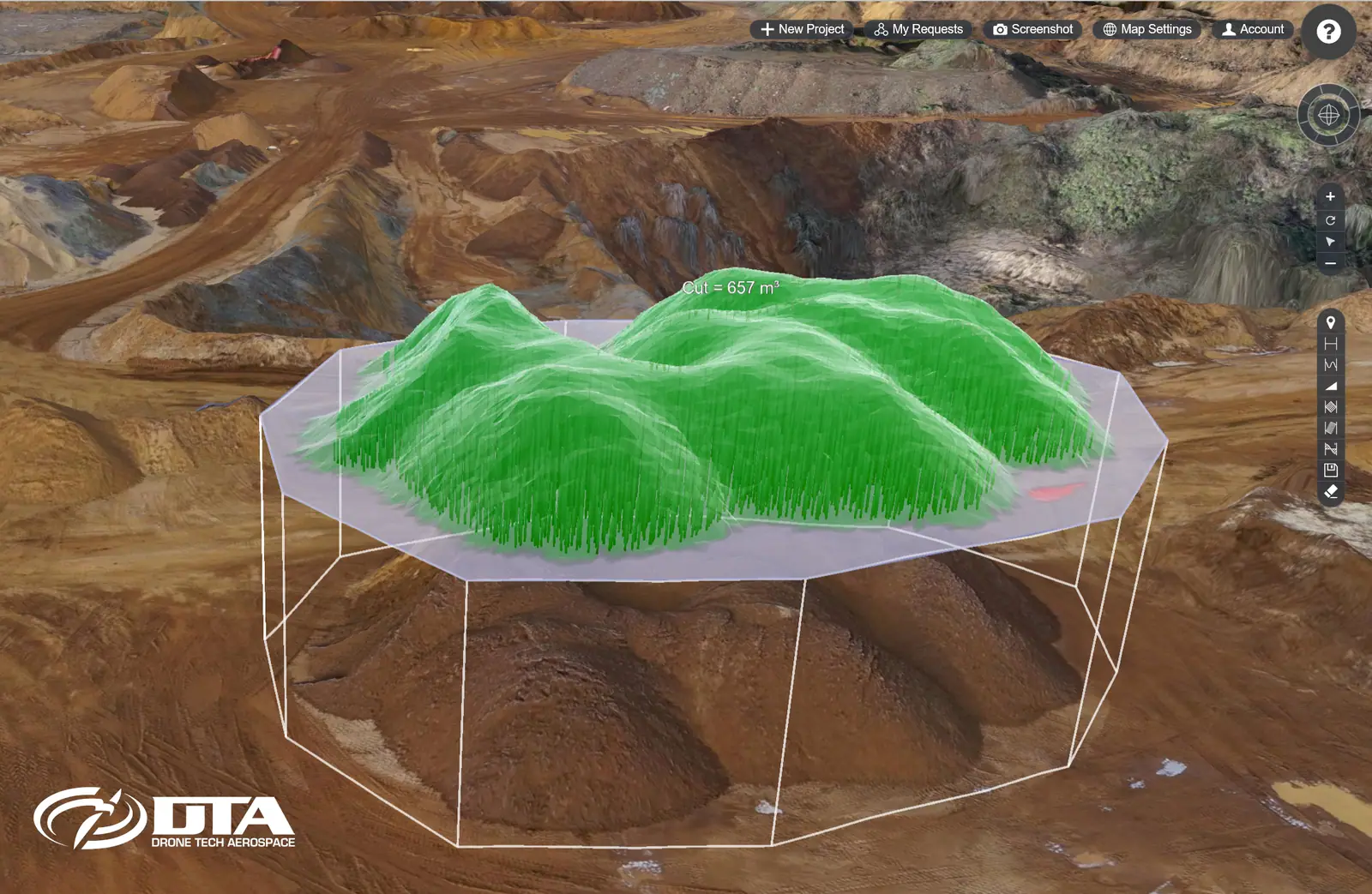
Volume comes directly from the surveyed surface — it's a measurement, not a guess. Tonnage is then calculated by applying a material-density figure agreed with you.
We never present tonnage as something measured directly from the air — only volume is.
What we measure
Six things sites ask us to quantify
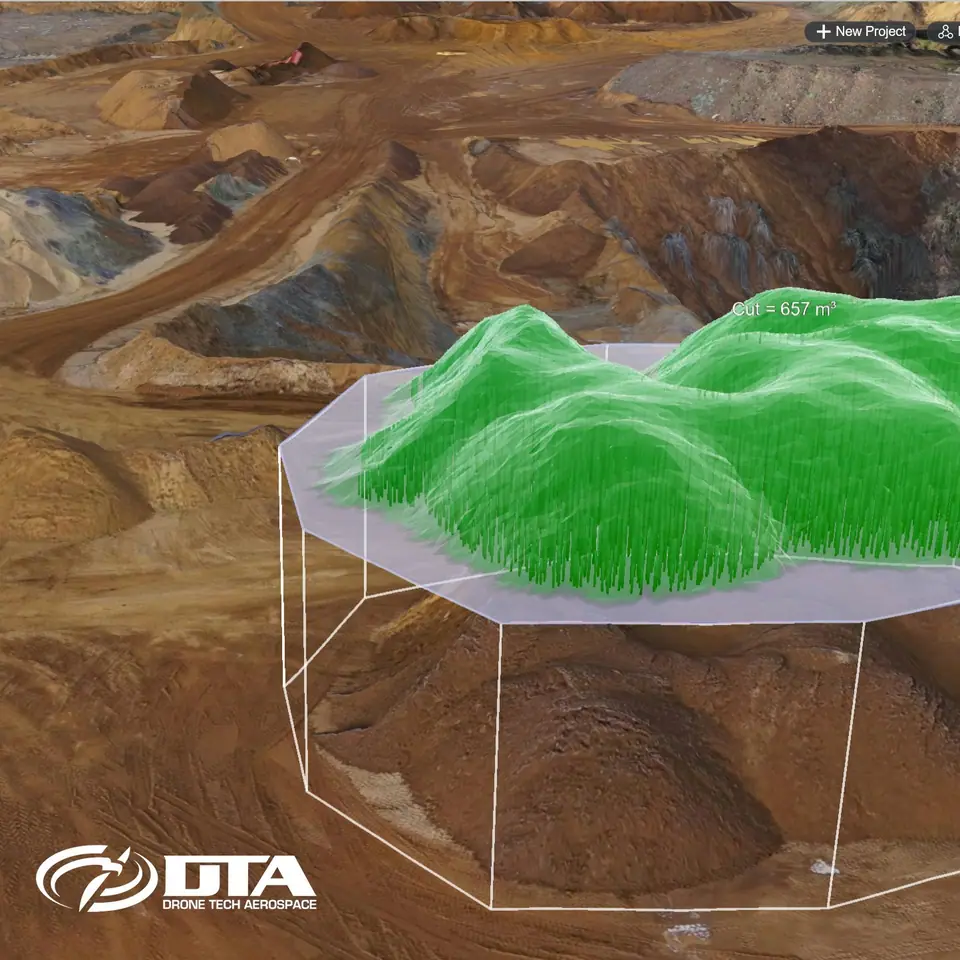
Stockpile volumes
Aggregate and material stocks quantified from the surveyed surface.
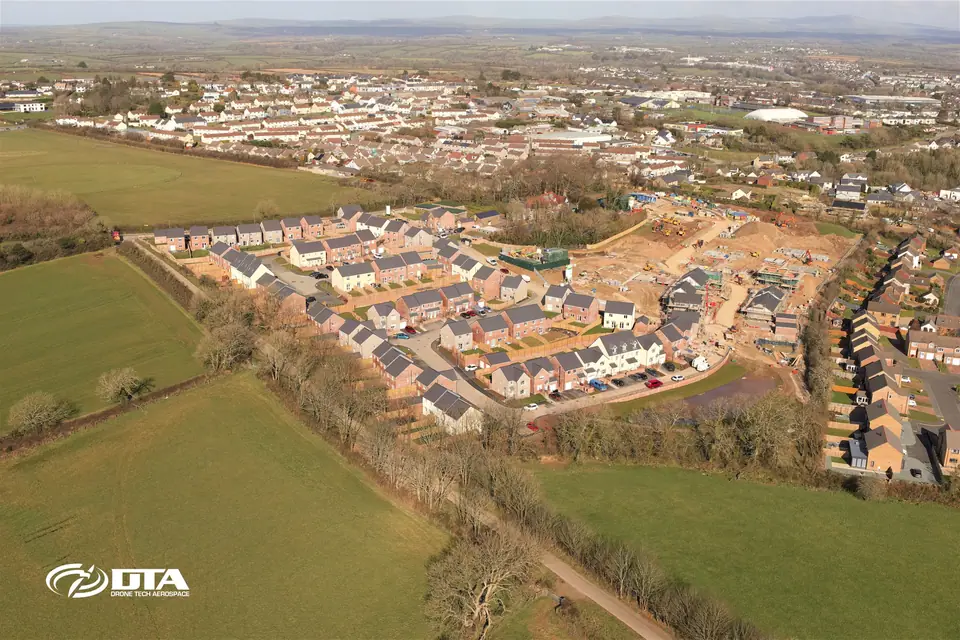
Cut & fill / earthworks
Excavation and fill quantities tracked as a site develops.
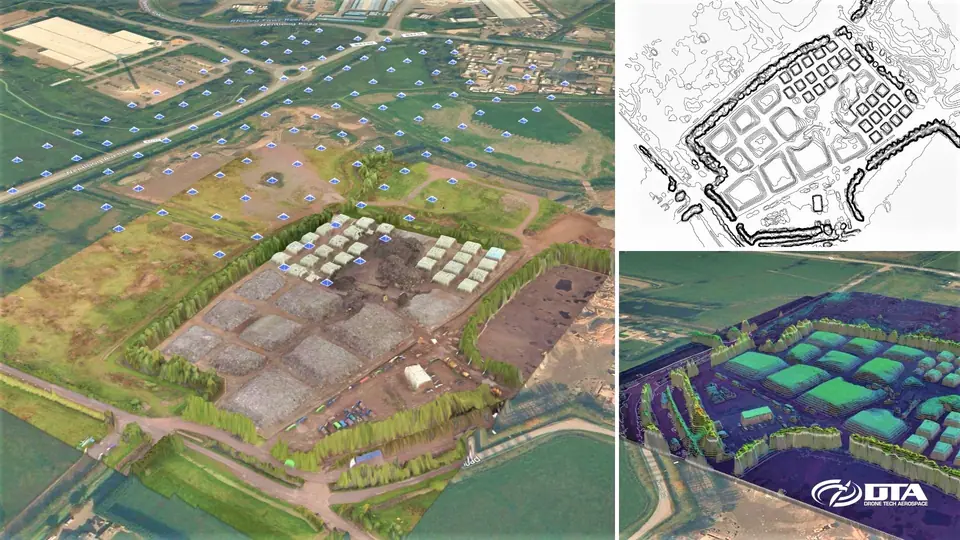
Landfill cells & airspace
Remaining capacity and fill progress measured against design levels.
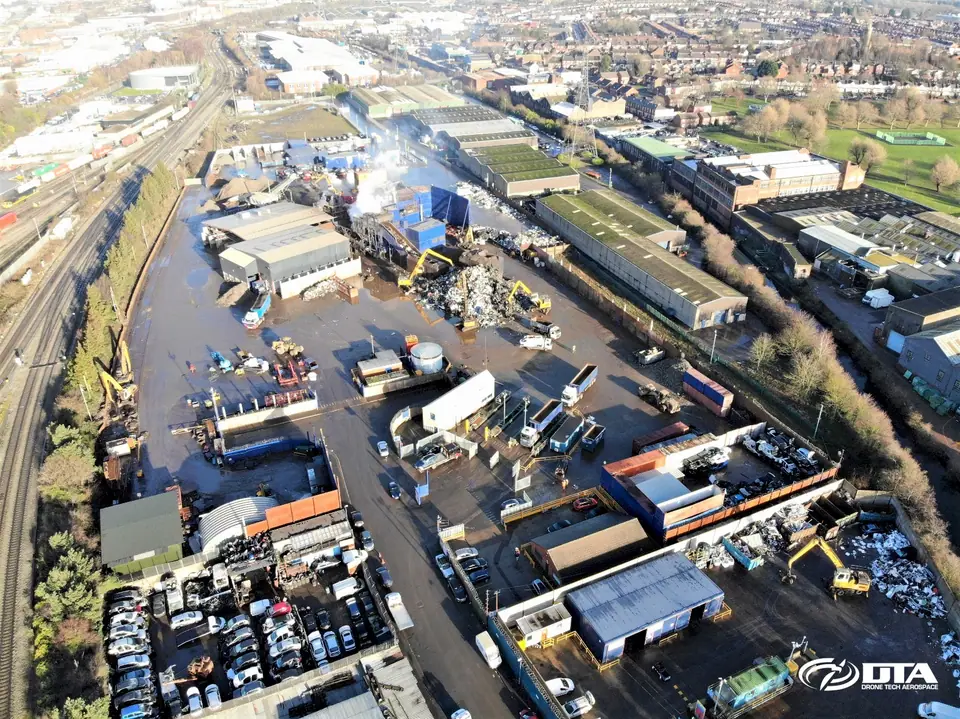
Complex materials
Irregular stockpiles such as scrap metal, measured where tape and eye can't.
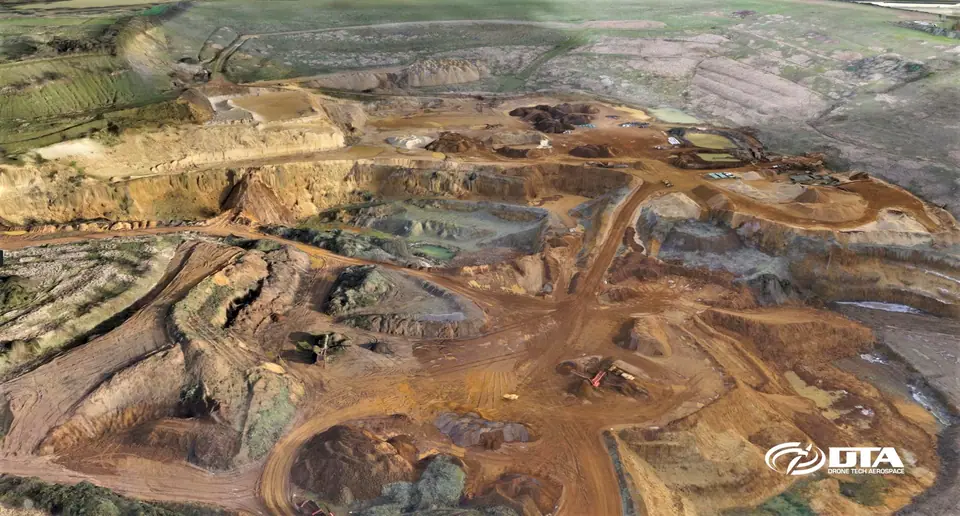
Quarry faces & benches
Extraction faces and benches surveyed for progress and reserves.
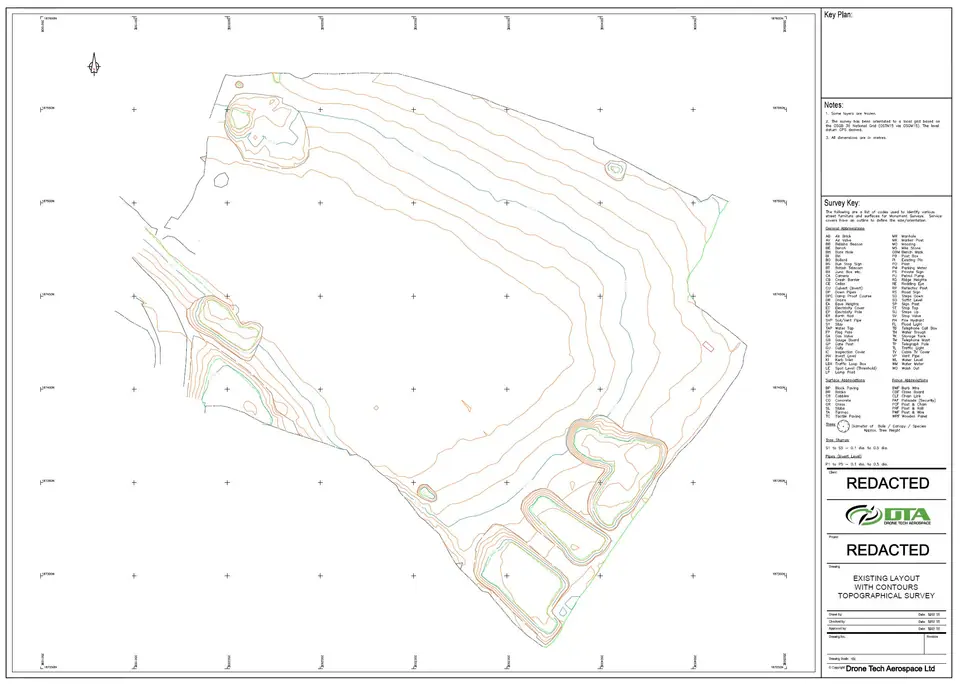
Levels & grades
Site levels and grading checked against design or contour drawings.
Change over time
The same boundaries, re-measured
Because we survey the same boundaries survey after survey, results are directly comparable — showing exactly how much material moved, month on month. That makes stock reconciliation straightforward rather than guesswork. Data is also available through an online cloud viewer with its own measurement tools, so your team can check volumes between surveys.
Where this fits
Built for material-heavy sites
Quarries & aggregates Construction materials Excavation & fill Landfill & recycling Material movement audits
Track record
Trusted on material-heavy sites
"…the complete DTA team applied a confident, professional approach, applying both the necessary safety standards … and mechanical kit to facilitate the high standards expected in today's off-road construction environment."
On HS2
6+ years
greenfield surveys to viaduct completion
Detail
Questions we're often asked
How is a stockpile volume calculated?
We survey the stockpile's surface from the air, then calculate volume against a base plane — either the ground surface beneath the pile or a fixed reference level agreed with you. The result is the material volume between the two.
How do you convert volume to tonnage?
Tonnage is calculated by multiplying the surveyed volume by a material-density figure agreed with you. Moisture content and compaction both affect real-world density, so we always report the figure we've used alongside the result.
Can you measure part-filled landfill cells?
Yes. We survey the current surface of a part-filled cell and compare it against the design or permitted surface to calculate remaining airspace. The same approach tracks fill progress from one survey to the next.
Free, no-obligation quotation
Tell us about your site.
Send the location and what you need — we'll come back with a clear scope and price.